
Bwindi Impenetrable National Park spans from lowland forest to a montage forest belt in southwestern Uganda. It is renowned for having a population of wild mountain gorillas and is said to have served as a refuge for several species throughout the previous ice age.
It is worthy to note that gorilla trekking is the principal activity in Bwindi. Nearly half of the mountain gorillas in the world today are found in this forest, and the opportunity to get up close and personal with these incredible animals is an experience that truly deserves to be called once in a lifetime.
But anyone who visits Bwindi solely for gorilla trekking and departs before sighting them suffers the danger of losing out. A little more time spent exploring the forest will reveal the park’s distinctive flora and fauna, the greatest hiking routes, and interesting facts about the people who call the forest home.
Activities in Bwindi Impenetrable Forest
Mountain Gorilla Trekking
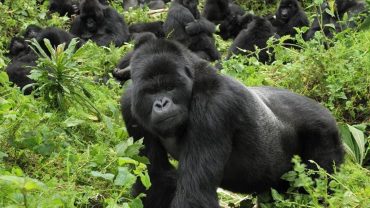
The main draw of Uganda’s Bwindi Impenetrable Forest is mountain gorilla trekking, which is also one of the best wildlife encounters in Africa, if not the best. Don’t miss it. Trekking with mountain gorillas is the most fulfilling, interesting, and unusual activity that allows tourists to discover the secret and happiness within the massive, impenetrable forest of Bwindi.
Although you may go mountain gorilla trekking all year round in Uganda’s Bwindi Impenetrable Forest National Park, the best times to visit are from June to September and December to February. With an estimated 500 mountain gorillas out of the 1004 in the world, Bwindi Impenetrable Forest National Park is home to half of the remaining mountain gorilla population.
There are more than 36 mountain gorilla families in the park, but only roughly 19 of them are habituated for tourist and scientific study. The remaining families remain untamed, with a few undergoing a process of acclimation. Because it is easily accessible, reasonably priced, and has a 98% probability of seeing mountain gorillas on any given day, Bwindi Impenetrable National Park is the ideal place to see gorillas.
Only those who have obtained a trekking permission from the Uganda Wildlife Authority (UWA), which oversees all wildlife-related activities and protected areas in Uganda, are permitted to hike with mountain gorillas in the Bwindi Impenetrable Forest National Park.
For conservation reasons, only eight people who are at least 15 years old are allowed to visit each mountain gorilla family each day. This means that anyone under the age of 15 is not allowed to interact with the gorillas. We urge you to book your permit at least three months in advance of your chosen trekking date in order to secure your permit and preferred trekking spot, as the quantity of mountain gorilla permits is restricted and sells out daily.
Gorilla Habituation
The primary attraction for tourists visiting Uganda’s Bwindi Impenetrable Forest National Park is the mountain gorillas, who account for a significant portion of the country’s foreign exchange earnings. Roughly 400 mountain gorillas live in the Bwindi Impenetrable Forest National Park, which accounts for half of all mountain gorilla populations worldwide.
For study and tourism, Bwindi Impenetrable Forest National Park is home to over 100 acclimated mountain gorillas. The four main hiking sectors of Bwindi Impenetrable Forest National Park are the Buhoma sector, which is located in the park’s northern section, the Ruhija sector in the park’s east, and the Rushaga and Nkuringo sectors in the park’s southern region.
Every sector in the park has habituated mountain gorilla families for tourist trekking and scientific investigations. Before making hotel reservations for your mountain gorilla trekking trip in Bwindi Impenetrable Forest National Park, you should consider which sector you will be trekking from and verify if permits are available for that sector. This will have an impact on the lodge you choose to stay at.
The most well-known area of the park is the Buhoma trekking sector, which is also regarded as the original location of mountain gorilla trekking in Uganda and the Bwindi Impenetrable Forest National Park. The Mubare gorilla family, which was founded in 1993 and has just two members, is the first family of mountain gorillas in the Buhoma area that has been trained for tourism.
As a result, the Buhoma region is always at the top of visitors’ and Uganda tour operators’ lists when discussing gorilla trekking in Bwindi Impenetrable National Park. The Buhoma sector is located in Kanungu district on the northwest edge of the Bwindi Impenetrable Forest National Park. Without a doubt, this is where Ugandan mountain gorilla trekking tourism got its start before branching out to other parts of the park.
There are currently five habituated mountain gorilla families in the Buhoma sector thus, the Mubare family, which became the first to become habituated and open for tourism in 1993; the Habinyanja family, which became the second to become habituated and opened for mountain gorilla tourism in 1997; and the Rushegura family, which became habituated in 2000.
The newest family is the Katwe family, which was only formed in 2018, and there are a few others that need to go through a two- to three-year habituation period before they welcome guests. This suggests that the daily sales of permits for mountain gorilla trekking in this sector are limited to 40. It goes without saying that the Bwindi Impenetrable Forest National Park’s popularity is greatly influenced by the fact that it was the first area of Uganda to be opened to tourists for mountain gorilla trekking.
Bwindi’s incredible biodiversity
There are 220 kinds of butterflies, 120 species of mammals, and 10 indigenous primate species in Bwindi Impenetrable National Park, an area of remarkable biodiversity.
Sadly, a large number of these species face global threats. An essential front line in conservation efforts is Bwindi. UNESCO has identified ecotourism activities as one of the most crucial means of assisting with the park’s continued conservation. Examples of these activities include guided nature and wildlife excursions.
Nature Walks and Forest Hiking
Depending on your interests, level of fitness, and time limits, there are several paths to select from for Bwindi’s nature walks, which wind through the lush forest.
Bwindi boasts some of the top south-west trekking paths if you’re determined to get in some quality hiking during your vacation.
There are six separate routes that lead through various areas of the forest. Along the way, you’ll come across some of Bwindi’s less well-known sites, including as the Muyanga waterfall, the Habinyanja swamp, and the “African Corner,” so called because of a rock that supposedly shows a map of Africa.
The Butterflies
Bwindi is a butterfly lover’s paradise. With 202 different species—representing 84% of Uganda’s total—found in the forest, which includes eight species that are unique to the national park, the forest is the most significant location for montane forest butterflies in all of Africa. For a glimpse of the extremely uncommon African gigantic swallowtail, also known as the Cream-banded swallowtail, take a stroll into the woodland.
Bird Watching / Birding
Those who enjoy birds will also enjoy this. There are 348 different species of woodland birds known to exist in the park, 23 of which are exclusive to the area. The African green broadbill, Shelley’s crimson-wing, and Chapin’s flycatcher are a few of the highlights. The primary months for nesting are May and June, and the birds have an abundance of food from May through September. From November until April, Bwindi is home to migratory birds.
Numerous tours that enable bird watching take place in the Buhoma area, on village walks and in the edges of the forest. They also happen in the park’s Ruhija section, where experienced guides bring guests through the area to see a variety of swamp and forest birds in their native environments. Wherever guests desireto go in Bwindi, the birds are always plentiful and easy to spot. Entebbe Botanical Garden is home to the red-chested sunbird.
Mountain biking
Mountain biking is an option for visitors to explore the Bwindi Impenetrable Forest in the Buhoma area. Cycling enthusiasts can follow a 13km track that circles the woodland and leads to the Ivi River’s banks. After stopping to take in the breathtaking scenery and fauna, the trail takes about six to seven hours.
This mountain bike adventure is being hosted by Buhoma Community Rest Camp as a part of the “Ride 4 a Woman” community program, which aids local women who are facing poverty, domestic abuse, and HIV. Renting a bike allows guests to directly contribute to the organization’s fantastic work supporting women and the neighborhood.
Owing to the organization’s success, it has grown to include women’s sewing and weaving cooperative. Spending time with the women and trying their hand at weaving is welcome. The Uganda Wildlife Authority inaugurated mountain bike routes in 2012. The Uganda Wildlife Authority inaugurated mountain bike routes in 2012.
The Buhoma community exploration
Kihihi Airstrip connects Entebbe International Airport and Kajjansi Airstrip, providing air transportation to the Buhoma trekking sector. Aerolink and Kampala Executive Aviation both offer flights. It is possible to fly from Kihihi airstrip to Masai Mara, which is convenient for those who want to combine their safari in Kenya with mountain gorilla trekking in Uganda.
There are daily scheduled flights from Entebbe airport and Kajjansi airstrip to Kihihi airstrip. Once you arrive at Kihihi airstrip, you pick up a car and drive to any of your lodge in the Buhoma trekking sector. To guarantee your seat on an airline to the Bwindi Impenetrable Forest National Park, you must make reservations in advance.
As the forerunner of mountain gorilla trekking tourism in Uganda and the Bwindi Impenetrable Forest National Park, the Buhoma trekking sector offers a variety of lodging options, including camping grounds, budget/standard, midrange/modern, and luxury/upscale safari lodges. All of these safari lodges are built in the true African style.
Therefore, there are always excellent lodges with private rooms with private toilets and bathrooms, access to power, Wi-Fi, and other standard services as per the gorilla tour package booked with us, depending on your budget and availability of space.
The Batwa community experience, supporting a disintegrated community
The Batwa people will accompany you on a hike through the forest as they describe to you how they used to live contentedly there before being forced to leave. A Batwa guide will accompany you on the forest hike, providing you with a wealth of firsthand knowledge about the forest and its inhabitants as seen through their eyes.
still, they will describe for you how they used to hunt, gather food, live, and take care of themselves without the use of any contemporary technology. As you learn how to shoot a bow and arrow from the Batwa, you will get to practice some hunting techniques.
Visiting a traditional homestead in Batwa and explaining to you the methods used by women to prepare, cook, and serve meals. Further, you will discover the medicinal qualities of the forest flora and learn how to combine them to treat any kind of illness from the local herbal medicine doctors. Listen to folk tunes and old tales.
They will also demonstrate for you how they used tree-houses, grass huts, and caverns to live. You will be entertained by the community entertainment groups with their customary cultural performances, and afterwards you will visit craft stores to purchase souvenirs. Supporting the Batwa craft stores can help them raise their standard of living and gain economic empowerment.
Ruhija Mountain Gorilla Trekking Sector
In the southwest of Uganda, in the eastern portion of the Bwindi Impenetrable Forest National Park, is the Ruhija Mountain Gorilla Trekking Sector. Due to its high elevation of 2,350 meters above sea level, the Ruhija sector is among the park’s coldest areas. It is located in the Bwindi Impenetrable Forest National Park, between Kabale Town and Buhoma Sector in the north.
Three habituated mountain gorilla families reside in the Ruhija sector and are open for tourism and scientific research. Among them are the families Bitukura, Kyaguriro, and Oruzogo. Every day, all 24 mountain gorilla trekking permits in the Ruhija sector are sold out to tourists.
Nkuringo Sector visit
One of the four trekking areas in Bwindi Impenetrable Forest National Park, which is home to half of the world’s remaining mountain gorilla population, is Nkuringo. There is only one mountain gorilla family there, the Nkuringo gorilla family, and they provide visitors with an amazing mountain gorilla trekking experience. It can be found in the deep, thick, and elevated southern region of the Bwindi Impenetrable Forest National Park. The “rolling hills” are the source of the family’s name for the Nkuringo mountain gorilla family, which is found in the Nkuringo mountain gorilla trekking sector.
In addition to being the ideal location for mountain gorilla trekking, the Nkuringo sector is also the best place for nature walks because it is encircled by local communities, who have direct knowledge of the forest and the mountain gorillas because they live nearby.
The other crucial aspect of Bwindi’s Nkuringo gorilla sector Trekking is possible in this national impenetrable forest by individuals from Rwanda and Uganda. If traveling from Kampala or Entebbe International Airport, it is more strategically close to Rwanda and Kigali City than Uganda. It takes roughly 5–6 hours to drive from Kigali City or the Airport, and more than 8–10 hours to drive from Entebbe International Airport or Kampala City.
Comment (0)