
Murchison falls National Park is also known as Kabalega national park. Murchison falls national park is found in north western Uganda, spreading inland from the shores of Lake Albert around the Victoria Nile up to Karuma falls. It stretches through the districts of Masindi, Kiryandongo, Bullisa and extends to Nwoya.
This park was first gazette in 1927 and established in 1952 by the British administration with the national park Act of Uganda. It was named Murchison falls by Explorer Baker after Roderick Murchison then the president of Royal geographical society.
It is the largest National Park in Uganda with an area size of 3840km2. Adjacent is Bugungu Wildlife Reserve (748km2) and Karuma Wildlife Reserve (720km2) all this forms Murchison fall Conservation area.
it is Murchison falls National Park only in the world with the most powerful water fall that emits large volumes of water about 300 Cubic Meters per second at a very powerful pressure that cause the feeling of the weak hearted to tremble and it is the most and best tourist destination with the highest numbers. Murchison fall National Park is a National Park in Uganda Managed by Uganda Wildlife Authority.
Activities In Murchison Falls National Park
There are a number of activities in the park but mostly, the top five are the most carried out activities in this park and they are
- Game drives
- Boat cruise
- Bird watching
- Chimpanzee trekking
- Nature walks
- Fishing and
- camping
Game Drives in Murchison Falls National Park.
It gives our esteemed visitors a great opportunity to explore the Park and enjoy great views of wildlife species. This is only possible with 4WD Safari vehicles and this is done in three sessions that is Morning, Afternoon and Night game drives.
- Morning Game Drive.
This is done in the morning after breakfast. It is the most exciting and rewarding where our Visitors get a chance to view most of the animals when very active for example Lions and Leopards when they are looking for a morning hunt, Elephants and Buffalos all in the big five, waterbucks, Uganda Kobs, Warthogs, Bushbucks, Oribi, Giraffes, Jacksons Hartebeest also will be grazing in Savanna plains with dew since they are Herbivores.
2. Afternoon Game Drive
It is not as Exciting as the morning game drive since the big Cats (Lions and Leopards) will be hiding for shades from the scotching sun and also some other animals so finding them is a little difficult.
3. Night Game Drives
This starts after dinner where our visitors are accompanied by Park Rangers. It is also rewarding where our visitors get an opportunity to view Nocturnal animals like Lions, Hyenas, Civet, Genets, Bushbabies, Nightjar, Leopards, Porcupines, Grazers like Hippopotamus, Elephants, Waterbucks, among others.
Boat cruise
This is one of the most interesting and exciting activities in Murchison falls and it is carried out in two categories thus;
- Boat cruise upstream to the bottom of the falls and,
- Boat cruise downstream to the Victoria Nile delta stretching to the shores of Lake Albert.
Boat cruise to the bottom of the falls
This cruise has two sessions that is; one which starts at around 9:00am in the morning and 2:00pm afternoon session where each session takes about 2 to 3 hours ride.
Both Boat cruises start from Para jetty land site and give our Visitors an opportunity to enjoy the stunning views of the falls and its beautiful scenery.
The large herds of Hippos in water, Elephants, Buffalos, Crocodiles basking on the banks, waterbucks, Uganda Kobs, Warthogs drinking water, aquatic bird species like African Jacana, Shoebill stork, Saddle bellied stork, Open bellied stork, African fish Eagle, Yellow footed Kingfisher, Goliath Heron, Grey headed kingfisher, Senegal thick knee, Blue headed Coucal, Swamp fly catcher, among others can never be left out to view during your cruise.
Boat Cruise Downstream to The Victoria Nile Delta
Lake Albert connects to river Nile through this point. During the boat ride to the Nile Delta, you will get an opportunity of going further upstream beyond where the boat usually reaches during the normal cruise.
For birders, this is a must do activity and one has to spare almost half a day to fully enjoy it. On your way to the lake, your always opportune to spot a lot of mammals that might have come to take water at the shores of river Nile and birds at the papyrus swamps around lake Albert.
Bird watching, Murchison falls National Park
Murchison falls National Park is a home to more than 450 recorded bird species inclusive of migratory birds, Savanna birds, Albertine Rift Endemic birds and Water birds.
Bird species can be spotted during game drive and Nature walks along Victoria Nile delta. some of the birds in the park are: Shoebill stork, black bellied Barbet, Yellow footed Kingfisher, Goliath Heron, Grey headed kingfisher, Senegal thick knee, Blue headed Coucal, Swamp fly catcher, Giant kingfisher, Black headed Lapwing, Yellow fronted Tinker bird, Long tales nightjar, Veracious dove, long toed plover, Grey crowned crane weave birds, Silver bird among others
Chimpanzee trekking in Murchison falls National Park
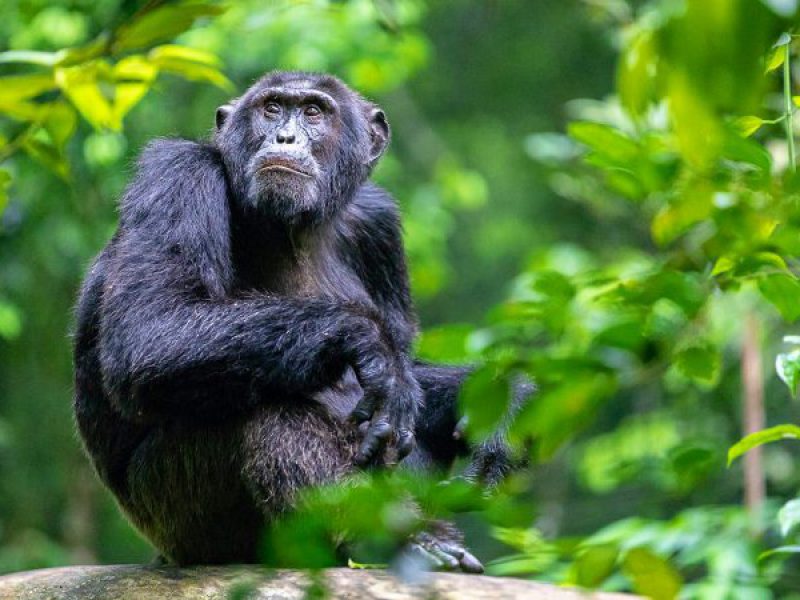
This activity is done in Budongo forest which is the biggest Mahogany Forest in East Africa.it starts with a briefing from tour guides about the rules and regulations while on a trek and the expectations while on your trekking. Before, visitors are divided into manageable group for example; a group of six people could be allocated to a Chimpanzee family to trek which takes 30 minutes to 4 hours depending on where Chimpanzees slept the previous night. Once a group sights the Chimpanzees, Visitors are allowed to spend one hour learning about their behaviors, watching them playing, feeding, fighting, hunting and take photos or record videos for future Memories.
What to know about chimpanzee
- One of our planet’s ‘great apes’, are the Chimpanzees along with gorillas and orangutans. Their faces are flat with big eyes, a small nose and a wide mouth. They have long arms that extend below their knees, short legs and black hair covering almost their entire body.
- These incredible primates live in the tropical forests and woodland savannahs of West and Central Africa. Today, populations are fragmented, with the largest groups found in Uganda, Gabon, Cameroon, and the Democratic Republic of Congo.
- The material that determines how a living thing will look and function of chimps and humans is 5% the same. That’s how closely related we are! As a result, we share many similar features, such as expressive faces, big toes and hands that can grasp. We also show similar behaviors, and like us chimps laugh when playing, hug to show affection and are able to walk upright.
- In the wild, chimpanzees live in ‘communities’ made up of around 15 to 80 members led by a dominant, alpha male. Within their communities, chimps sleep, travel and feed in smaller sub-groups of up to ten. These sub-groups can be very flexible, with members changing quickly and regularly.
- After humans, chimpanzees are the most intelligent of our planet’s primates (an animal group which includes apes and monkeys, too), and they’ve developed impressive ways of communicating. These clever critters “talk” to each other using different gestures, facial expressions and numerous vocalizations, too, such as hoots, grunts and screams.
- Chimpanzees are experts at grooming, and spend a lot of their time running their fingers through each other’s hair to remove dirt, pesky parasites and dead skin. Yucky, eh? Well, it might sound a bit gross to us, but grooming is a super important activity for these cool critters – it not only keeps them clean, but helps them build friendships and strengthen bonds with each other, too.
- When it comes to food, chimpanzees aren’t exactly fussy! Fruit is at the top of their menu, but they also tuck into leaves, flowers, seeds, bird eggs, insects and even other animals, too, such as monkeys and wild pigs. Some groups of chimps eat up to 200 different kinds of food, in fact.
- These awesome apes are one of the few animals that use toolsto help them get things done. Chimpanzees have been known to crack open nuts with rocks, fish out insects from nests and logs using sticks, and shelter from the rain by holding up leaves like umbrellas. Impressive stuff!
- Females generally give birth to a single chimp (or occasionally twins) every five to six years. For the first six months, the baby chimpanzee clings to the fur on its mother’s belly, and then later rides around on her back until the age of two. After that, the youngster will spend the next seven to ten years by its mother’s side learning how to find food, use tools and build nests to sleep in.
- Once found throughout the tropical forests of West and Central Africa, today only around 150,000-200,000 chimpanzees remain in the wild. Sadly, since the early 19th century populations have declined because of habitat loss, hunting and capture for use in zoos, circuses and medical research. To find out what’s being done to help protect this precious, endangered species– and how you can help, too! – Head over jungle trekkers.com
Nature Walks in Murchison Falls National Park
In the park, visitors get a chance to explore the Park on foot with an experienced park guide and armed game Ranger. The nature Walks are mostly done in Kaniyo Pabidi and Kabongo Forest where Visitors yet very close to primates like Chimpanzees, black and white Colobus Monkeys, Red tailed monkeys, variety of bird species among others.
Animals in Murchison Falls National Park
It has four to complete the big five list and only a visitor needs to pass by the Ziwa Rhino Sanctuary on the way heading to the park. The animals in this park are Often seen while on Boat cruise and during game drives.in the morning you have a chance to view the lions, Leopards as they look out for a morning hunt, Buffalos, Elephants, Uganda Kobs, Bushbucks, Hartebeest, Waterbucks, Hyenas Warthogs among others.
Birds in Murchison Falls National Park
It is a haven for birders accommodating more than 500 bird species and along to your birding Safari you get a chance of spotting pre-historic bird known as Shoebill stork and other birds include; black bellied Barbet, Yellow footed Kingfisher, Goliath Heron, Grey headed kingfisher, Senegal thick knee, Blue headed Coucal, Swamp fly catcher, Giant kingfisher, Black headed Lapwing, Yellow fronted Tinker bird, Long tales nightjar, Veracious dove, long toed plover, Grey crowned crane weave birds, Silver bird Martial Eagle among others and this makes this Park one of the best birding destination in East Africa.
The best time to visit this Park is from December to February, second option is June to August however this Park is open to Visitors all year around.
Lodges
Chobe Safari lodge, Paraa Safari lodge, Heritage Safari lodge, Park side Safari Lodge, Fort Murchison lodge, Shoebill Camp site.
Comment (0)