
This park was named after the royal Queen Elizabeth 11 of England; it was founded in 1952 as Kazinga national park that connected Lake George and Edward game reserves. It was renamed two years later in 1954 to commemorate a visit of Queen Elizabeth 11 in Uganda. Presently kazinga channel connects the two lakes of George and Edward and it is habitat for some animals and birds along its shores. It has an area size of 1978km2 which makes it the second largest national park in Uganda after murchison falls national park.
Queen Elizabeth national park is found in western Uganda stretching through the districts of kasese, Rukungiri, Mitooma ,Rubirizi, kitagwenda and Kamwenge districts. The park is approximately 410km from Kampala to kasese via Fort portal in Kabarole district and 387km via Mbarara.
The park adjoins Kyambura game reserve to the east in Rubirizi district which itself adjoins Kigezi game reserve including the Maramagambo forest in Mitooma district and thus Kibale national park to the north east. The Virunga national park in the democratic republic of Congo lies across the border to the west, together these protected places completely encircle lake Edward.
Activities In Queen Elizabeth National Park
Queen Elizabeth national park is one of Uganda’s most popular tourist destinations annually receiving one of the highest number of visitors in the country’s national game parks. Some of the popular activities in this park include;
- Chimpanzee tracking in Kyambura gorge,
- Boat cruise on Kazinga channel to view some animals,
- Guided game drives and viewing tree climbing lions in the Ishasha sector,
- Night game drives and nature walks and
- Lion experience with the Uganda carnivore program.
It only takes around 7 hours to drive on road but also the park is connected by daily domestic flights from Entebbe international airport that land at Mweya, Kihihi and Kasese airstrips.
The park has two rainy seasons from March to May and September to November but rainfall varies within the park.
Animals In Queen Elizabeth National Park
The big five in Queen Elizabeth national park are the famous animals including the Elephants, Lions, Buffalos, Hippopotamus and Leopards. The big five was derived from the big game hunters which mean the five most difficult wildlife species to hunt in Africa and Uganda in particular. Nowadays this term the big five is commonly used in the tourism industry by tour operators and safari companies in the whole world. Uganda offers a golden opportunity to the tourists to see the big five mammals in the parks like Queen Elizabeth, Murchison falls, Kidepo Valley, Lake Mburo national parks among others inclusive of the Rhinos in Ziwa Rhino Sanctuary.
African Elephants In Queen Elizabeth National Park
They are the largest herbivore mammals in the world which make it difficult to locally hunt because of its size weighing between 3500- 12000kgs and ability to camouflage in tall savannah grassland. This park is a home to over 2000 Elephants, feeds on grass, tree branches, shrubs that all weigh between 140-270kgs, 30-50 gallons of water, they live in family groups of up to 100 members both female and male which are very protective but all have a life span of 50-80 years.
African Lions In Queen Elizabeth National Park
They are the largest carnivores we have in the park and are always described as the ‘king of the jungle’.
Queen Elizabeth national park is the only park in Uganda with tree climbing lions found in the southern part of Ishasha. The lions are the only cats to live in a group and are often found hanging, sleeping or resting on big tree branches in afternoon to cool off, see the prey to hunt, run away from tsetse flies among others.
Female lions are excellent hunters because they weigh less pounds that is over 300 pounds thus easy mobility while as the male lions are protective and they weigh over 400 pounds.
Queen Elizabeth national park is the only park in Uganda which permits a tourist to take part in Lion trekking experience with the researchers and guide during the lion trekking. A safari vehicle is allowed to go off track so as it goes near the lion once it has been tracked for a clear view to take good memorable photos.
The Leopards In Queen Elizabeth National Park
These are usually seen during the game drives especially when you use the Kasenyi track. Leopards are carnivores and also belong to the Cat family just like Lions. Leopards are nocturnal animals unlike other cats they camouflage at night but can be seen if a visitor participates in a night game drive meaning they are more active in the night than during day. They prefer thick bush when they have a prey they have killed and climb up in the trees to keep their hunt from the lions and the hyenas.
Their prey is always fish, reptiles birds, baboons, monkeys, antelopes among others. Male leopards weigh about 130 pounds while female lion weighs about 80 pounds with a life span of 15-20 years.
The Hippopotamus In Queen Elizabeth National Park
It is also one of the largest attractions in Queen Elizabeth national park. They are the second largest mammals in the world after the Elephant. Hippopotamus are the herbivores that live both in water when strongly shinning and on land at night. They eat grass at night consuming up to 150 pounds of grass.
During the day, hippos stay in the water to shield against the sun. An adult hippo weighs about 3 tons with a life span of 40-50 years. They mate and give birth while in the water at Kazinga channel which connects Lake Edward and Lake George and it is this area with the highest number of hippos in Uganda and around Ntungwe River in Ishasha area.
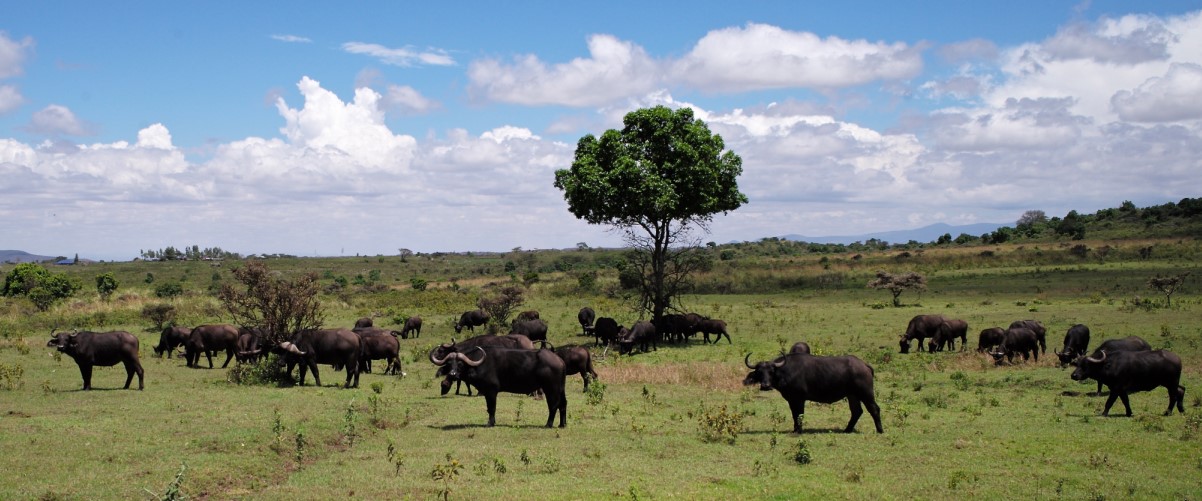
African Cape Buffalos In Queen Elizabeth National Park
They are also known as water Buffalos. They are communal animals that live in large herds. They live in two types of groups that is say: the female and calves and the bachelor herd. Male bachelors have young Buffalos of 4-7 years and adults of 12 years and above but the young Buffalos like to fight the old and aging Buffalos and they end up being chased and individually isolate themselves for their safety in the grassland.
They have a life span of 15-25 years and they live in open savannah grasslands near the water banks of Lake George and Edward because they drink a lot of water during the hot days to cool off their bodies. An adult Buffalo weighs up to 700kgs.
Other Animals in Queen Elizabeth National Park
Queen Elizabeth national park has 95 mammal species like Uganda Kob, warthogs, antelopes, duikers , water bucks, oribi, topi, giant forest hog, mongoose and many primate species like chimpanzees, baboons , monkeys.
Birds include the shoe bill, bee- eaters, white winged warbler, papyrus gonolek, pink backed pelican, flamingos, eagles.
Accommodation in Queen Elizabeth
- Kyangabi carter resort
- Mweya safari lodge,
- Bush lodge,
- Bufallo lodge,
- Pumba safari lodge among others.
The best time to visit Queen Elizabeth national park starts from June, July and August t because it is the period when we experience a long dry season. The short dry season is also good to visit the park and this starts from Mid-December to end of February.
Comment (0)