
UGANDAN
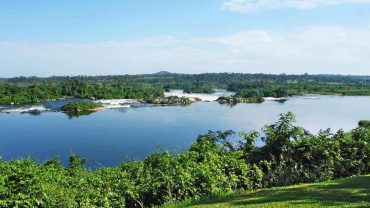
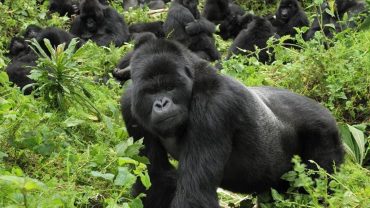
Uganda is a landlocked country in East Africa and also referred to as the Pearl of Africa. It’s blessed with various species and lots of beauties. It’s diverse landscape encompasses the snow-capped Rwenzori Mountains, the source of river Nile and immense Lake Victoria. Its abundant wildlife includes chimpanzees, goliras and rare birds. Remote Bwindi Impenetrable National Park is a renowned mountain gorilla sanctuary. Murchison Falls National Park in the northwest is known for its 43m-tall waterfall and wildlife such as hippos.
Because Uganda is located at the equator, there is little variation in the sun’s declination at midday, and the length of daylight is nearly always 12 hours. All of these factors, combined with a fairly constant cloud cover, ensure an equable climate throughout the year.
Uganda is a home to Lions and leopards that are mainly in animal reserves and national parks, but they are occasionally seen outside these places. It inhabits Hippopotamuses, crocodiles, Mountain gorillas, chimpanzees, small forest elephants, Elephants, buffalo, the Uganda kob (an antelope), black rhinoceros and giraffes. The country still houses Zebras, topis, elands, roan antelopes, oryx, greater and lesser kudu, and Grant’s gazelle. Uganda is home to a diverse variety of bird life, including threatened species. Most of the country’s national parks provide excellent bird-watching opportunities. The country’s varied fish life includes ngege (a freshwater nest-building species of Tilapia), tiger fish, barbels, and Nile perch.
Uganda has 10 national parks thus; Murchison Falls National Park (the largest park in Uganda), Queen Elizabeth National Park that is about half the size of Murchison Falls. Bwindi Impenetrable Forest national park, Mgahinga Gorilla National Park. Rwenzori Mountains National Park, Margherita Peak.
“Uganda is a fanciful magical nation that embraces many ecosystems, from the tall volcanic mountains of the eastern and western frontiers to the densely forested swamps of the Albert Nile River and the rainforests of the country’s central plateau. The land is richly fertile, and Ugandan coffee has become both a backbone of the agricultural economy and the best connoisseurs around the world.
Uganda is bordered by South Sudan to the north, Kenya to the east, Tanzania and Rwanda to the south, and the Democratic Republic of the Congo to the west. The capital city, Kampala, is built around seven hills not far from the shores of Lake Victoria, which forms part of the frontier with Kenya and Tanzania. With its many and beautiful national parks that contain a number of animals.
Uganda is a natural tourist destination. From independence until the early 1970s, tourism was a major part of the economy and ranked third after coffee and cotton in producing foreign exchange. Under President Amin, however, tourism ceased and the national parks were neglected. Since the mid-1980s tourism has slowly increased, and foreign investment in new hotels has also expanded.
ETHNICITY AND LANGUAGE
Uganda, a country in East-central Africa is blessed with a number of diverse ethnic groups. These groups are majory divided into two; The Nilotics and the Bantu groups. The Bantu is the biggest ethnic group with different groups like, the Ganda (which is the largest single ethnic group), the Soga, Gwere, Gisu, Nyole, Samia, Toro, Nyoro, Kiga, Nyankole, Amba, and Konjo. A sizable population of Rwanda (Banyarwanda) speakers, who had fled Rwanda in the late 1960s and early ’70s, also live in Uganda. When being refered to, they take the affix Ba- for instance; Baganda or Basoga. The Nilotics group that mainly originates from northern Uganda consists of the Jonam, Acholi, Alur, Langi, Padhola and Lulya people.
There are at least 32 languages spoken in Uganda, but English is the official language and Kiswahili. Ganda is the language of business and the most commonly used. English is the language of education and of government, and, even though a few people speak English well, access to high office, prestige, and economic and political power is almost impossible without an adequate command of that language. Swahili was chosen as another official national language because of its potential for facilitating regional integration amongst the East African countries and it’s the language of the army and other security agencies. Each indigenous group has a different language used in addition to English, French, and Swahili
RELIGIONS OF UGANDA
Uganda has two main religions thus; Islam and Christianity. The largest population is Christian, primarily divided between Roman Catholics and Protestants (Anglicans) but also including Pentecostals, Seventh-day Adventists, Baptists, and Presbyterians. As in other parts of Africa, these two: Islam and Christianity have been combined with traditional practices and indigenous religions to form various syncretic religious trends.
DAILY LIFE AND SOCIAL CUSTOMS
In the countryside, lives of the people is filled with numerous festivals and ritual celebrations, including marriage “introductions,” weddings, births, christenings, and other family gatherings. As in other places, the agricultural year is marked by a number of important events that require social gatherings. Other holidays, celebrated nationwide, are drawn from the Christian and Muslim calendars or commemorate events in Ugandan history, such as Martyrs’ Day (June 3rd), Heroes’ Day (June 9th), and Independence Day (October 9th).
SPORTS AND RECREATION
Sports is a vastly popular cultural activity, with millions of Ugandans supporting their favourite football (soccer) teams. Kampala is home to one of the largest sports stadiums on the continent, completed in the late 1990s. Boxing and wrestling are also immensely popular. The country’s first Olympic gold medal was earned by John Akii-Bua, who competed in the men’s 400-metre hurdles at the 1972 Summer Olympics in Munich.
Comment (0)